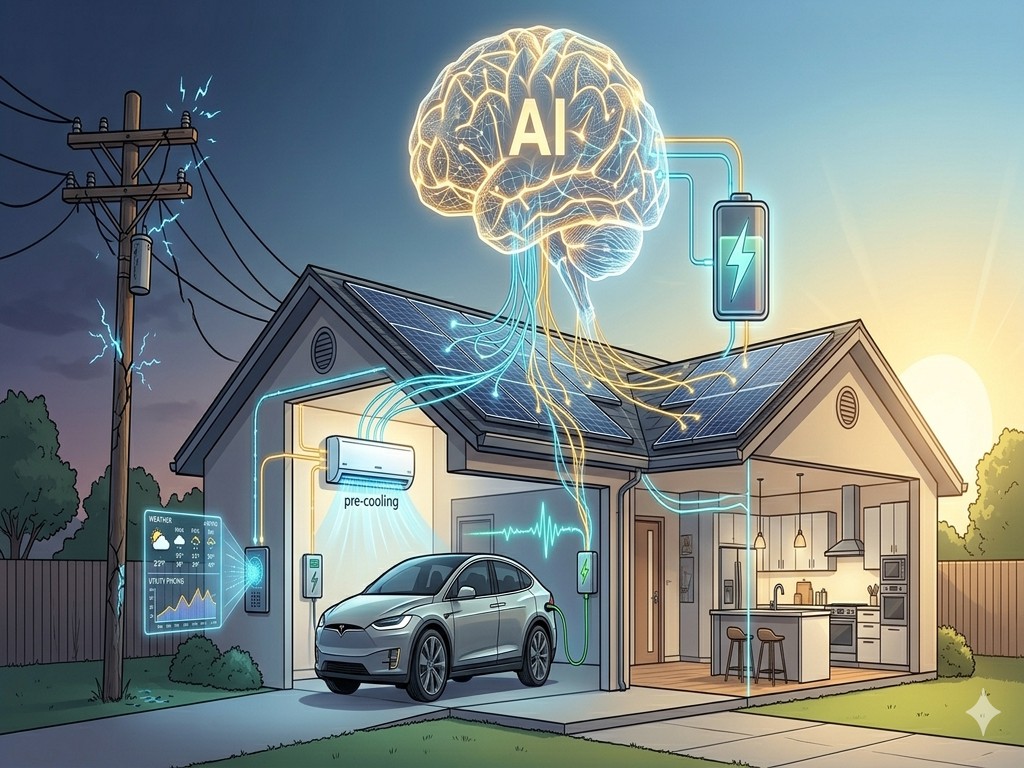
How AI Energy Systems Are Revolutionizing Home Electricity: A Homeowner's Guide
For over a century, the way we interact with electricity has been remarkably simple: we flip a switch, the light comes on, and at the end of the month, we pay whatever total appears on the bill. While our phones, cars, and workplaces have undergone digital revolutions, the grid—the massive network that delivers power to our homes—has remained largely stuck in the twentieth century. Most of us still live in a world where we have no control over where our power comes from or how much it costs at any given second.
However, we are currently witnessing a historic shift. A combination of rising utility costs, aging infrastructure, and a global move toward renewable energy has created a perfect storm for the traditional power model. In response, a new generation of technology is entering our homes. By combining artificial intelligence with solar panels and battery storage, homeowners are transforming from passive consumers into active, smart energy managers. This change is not just about being "green"; it is about taking back control of a household's most consistent monthly expense.
The Cracks in the Traditional Power Grid
To understand why AI is becoming necessary, we first have to look at the limitations of the traditional grid. For decades, the system was centralized and followed a one-way path. Large power plants fueled by coal, gas, or nuclear energy sent electricity across hundreds of miles of transmission lines to reach your front door. This model assumes that the power plant can always provide exactly what the consumer needs at any moment, but that assumption is becoming harder to maintain.
Our demand for power is skyrocketing, driven by the rapid adoption of electric vehicles, high-powered air conditioning, and a constant-on digital lifestyle. At the same time, the grid is facing more frequent stress tests from extreme weather events, such as record-breaking heatwaves and intense winter storms. When the grid is pushed to its absolute limit, utilities often have to fire up "peaker plants"—expensive, less efficient power plants that are only used during emergencies. These costs are eventually passed down to the homeowner, which is why many families see their rates climb even if their actual usage stays the same.
Furthermore, there is the growing issue of energy waste. When renewable sources like wind and solar produce a surplus of energy during a breezy or sunny afternoon, the grid often has nowhere to put it. Without a way to store and manage that energy locally, that clean power is frequently lost. This inefficiency is a missed opportunity for both the environment and the consumer's wallet.
Enter the Brain: How AI Manages Your Home
This is where artificial intelligence steps in to bridge the gap. If solar panels are the lungs of a modern home and a battery is the heart, then AI is the brain. An AI-powered energy management system does not just sit idle; it constantly learns, predicts, and reacts. It acts like a personal financial advisor for your electricity, ensuring you never buy power at its most expensive and never waste the power you have generated for free.
These systems work by analyzing massive amounts of data in real-time that a human simply could not track. For instance, the AI monitors hyper-local weather forecasts to determine if tomorrow will be cloudy. If it expects a storm, it may choose to hold onto more battery power tonight rather than using it. It also tracks utility pricing, which in many areas fluctuates depending on the time of day. By knowing that electricity costs significantly more during the peak hours of late afternoon and early evening, the AI can strategically shift your home's behavior without you ever having to lift a finger.
The true power of AI lies in its ability to learn household habits. It begins to understand when the family usually runs the laundry, how often the dishwasher is used, and exactly when the electric vehicle needs to be fully charged for the morning commute. By processing this data, the AI makes hundreds of micro-decisions every day that optimize efficiency. Because these adjustments happen automatically in the background, the homeowner enjoys the savings without having to micromanage their appliances or stare at a complicated dashboard.
Real-World Savings in Action
To see the value of these systems, we can look at how AI handles a typical high-demand day. Imagine a blistering summer afternoon where temperatures hit triple digits. In a standard home, the air conditioning works its hardest between 4:00 PM and 8:00 PM, which is exactly when utility companies charge their highest rates. An AI system, however, sees this coming hours in advance. It might choose to "pre-cool" the home at 2:00 PM using free solar power while the sun is at its peak. By the time the expensive evening rates kick in, the home is already comfortable, allowing the AC to rest while the rest of the neighborhood is paying surge prices.
A similar logic applies to the heavy demand of electric vehicles. If you plug in your car after work at 6:00 PM, a standard charger starts pulling power immediately, often during those same expensive peak hours. An AI-managed charger communicates with the grid and waits until the middle of the night—when demand is at its lowest and prices are at their floor—to fill the battery. This ensures the car is ready by dawn at a fraction of the cost it would have incurred just a few hours earlier.
From Homeowner to Energy Participant
One of the most exciting developments in this field is the shift toward decentralization through Virtual Power Plants, or VPPs. In the past, you were just a customer at the end of a line. Today, you can be a participant in a larger energy community. When thousands of homes are equipped with AI and batteries, they can be linked together to support the local grid. If the city's power supply is about to fail due to high demand, the utility can essentially "borrow" power from these smart homes rather than letting a blackout occur.
In many regions, homeowners are actually compensated for this service. Through various credit programs, your home becomes a tiny power plant that earns you money while helping to stabilize the energy supply for your neighbors. This creates a more resilient and flexible network where energy is shared locally rather than being shipped across state lines.
The Bottom Line: Costs and Resilience
The most common question homeowners ask is whether this technology is truly worth the investment. While the upfront cost of solar panels, batteries, and AI controllers can be significant, the financial landscape is changing rapidly. Federal tax credits, local utility rebates, and increased home resale values all contribute to a much faster return on investment than in years past. In many cases, these systems pay for themselves within a decade, after which the electricity generated is essentially free.
Beyond the financial benefits, there is the intangible benefit of peace of mind. When a storm knocks out a transmission line and the surrounding neighborhood goes dark, a home with an AI-managed battery stays bright. The system automatically detaches from the grid and sips power from the battery, prioritizing essential items like the refrigerator, lights, and Wi-Fi. It is a level of independence and security that simply was not possible for the average homeowner a generation ago.
The future of home energy is not just about being environmentally conscious; it is about being technologically savvy. As AI continues to evolve, our homes will become more than just shelters. They will become intelligent, self-sustaining hubs that help the planet, stabilize our communities, and keep more money in our pockets. By embracing these tools today, homeowners are securing a more affordable and reliable tomorrow.