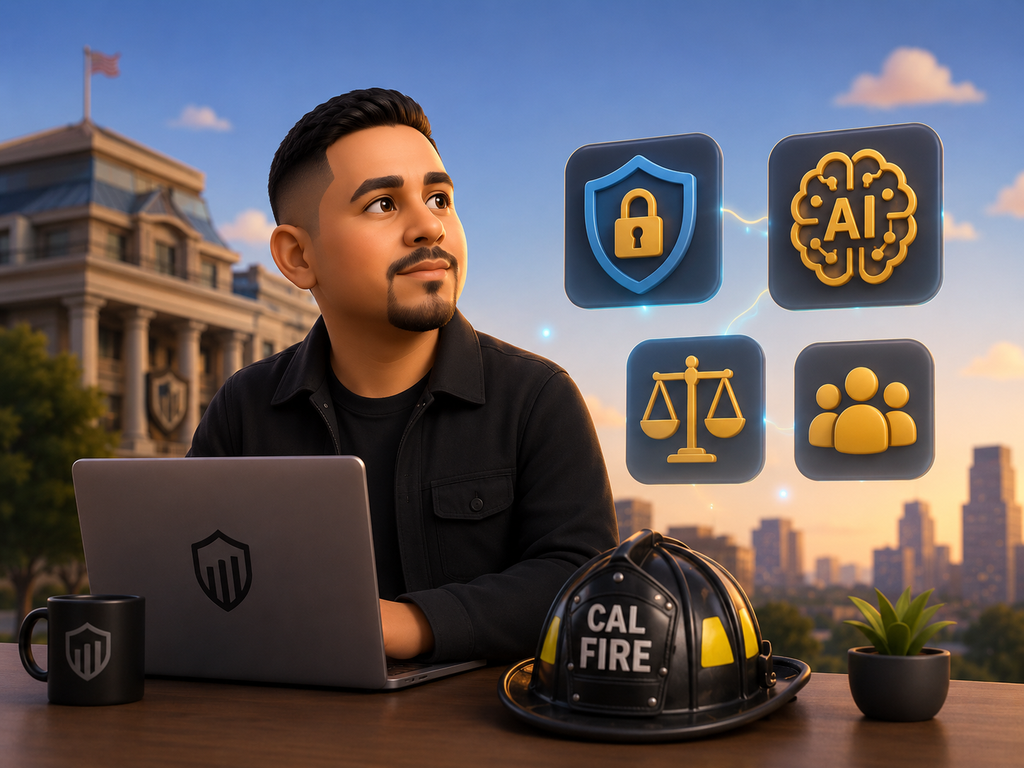
From a Prison Cell to Building AI Tools for Criminal Justice
Pablo Asencio's story doesn't follow the usual path into tech. There was no computer science degree, no bootcamp certificate, no internship at a startup. There was prison, a felony record, and a world that didn't want to give him a second look. What he built from that starting point is remarkable — not because it's unlikely, but because it shows what happens when someone with firsthand knowledge of a broken system gets access to the tools to fix it.
A Record That Closed Every Door
Asencio was released from incarceration in March 2022. He was ready to work — any job, any shift. But his felony record made that nearly impossible. Employers saw the background check and stopped reading. It didn't matter that he'd spent years educating himself while incarcerated, earning a bachelor's degree in psychology. It didn't matter that he'd served as a Cal Fire firefighter, running toward danger to protect communities. The paperwork said felon, and that was the end of the conversation.
It's a cycle that plays out across the country every day. People who've done the work to change, only to find that nobody's willing to see past the record.
Teaching Himself AI From Scratch
Instead of waiting for someone to give him a chance, Asencio gave himself one. He discovered large language models — tools like Anthropic's Claude — and realized he could interact directly with AI to learn programming, data science, and prompt engineering. Where a traditional path might have required years of computer science classes, Asencio used AI as both teacher and collaborator, leapfrogging the conventional route entirely.
He enrolled at UC San Diego as an international business student, where he connected with mentors who understood his journey. Bioengineering professor Benjamin Smarr became a key supporter. So did data science doctoral fellow Conan Minihan — someone Asencio had originally met in San Diego County Jail around 2011. Both had pushed past stigma to pursue education, and their reconnection on campus became a real partnership.
iCipher: AI for Justice
Asencio's first major project is iCipher — a justice-focused AI tool that uses cell phone and financial data to help clarify where someone actually was during an alleged crime. For legal defense teams, that kind of evidence can be the difference between a conviction and an acquittal. iCipher increases the accuracy and speed of fact-checking in criminal cases, putting powerful analysis tools in the hands of people who need them most.
He built it using Vercel for frontend development and Anthropic for backend AI, alongside a health-focused app called Aralan. Together, these projects form the foundation of his SaaS business — cloud-delivered tools designed to tackle real problems in criminal justice and health.
Giving Back to the Community
Asencio isn't just building for himself. Through UC San Diego's Triton Underground Scholars program — which supports formerly incarcerated and system-impacted students — he's become a panelist and motivational speaker. He works with at-risk youth and justice-impacted individuals navigating reentry, showing them what's possible when technology and education meet determination.
His message is straightforward: the system may have written you off, but AI doesn't care about your record. It cares about what you can build.
Why This Story Matters
Pablo Asencio's story is exactly what AI Bridge Foundation exists to highlight. He didn't have a computer science degree. He didn't have venture capital or industry connections. He had a felony record, a psychology degree earned behind bars, and the determination to teach himself AI when nobody would hire him.
Now he's building tools that could change how criminal defense works — using the same technology that the most well-funded companies in the world are racing to deploy. That's what happens when AI access reaches people who understand the problems firsthand. Not from a research paper. From lived experience.
Sources & Further Reading
- Rewriting Reentry: How One UC San Diego Student Is Building a Future with SaaS — UC San Diego Today, March 2026
- iCipher — Pablo Asencio's justice-focused AI tool
- Triton Underground Scholars — UC San Diego program for formerly incarcerated students