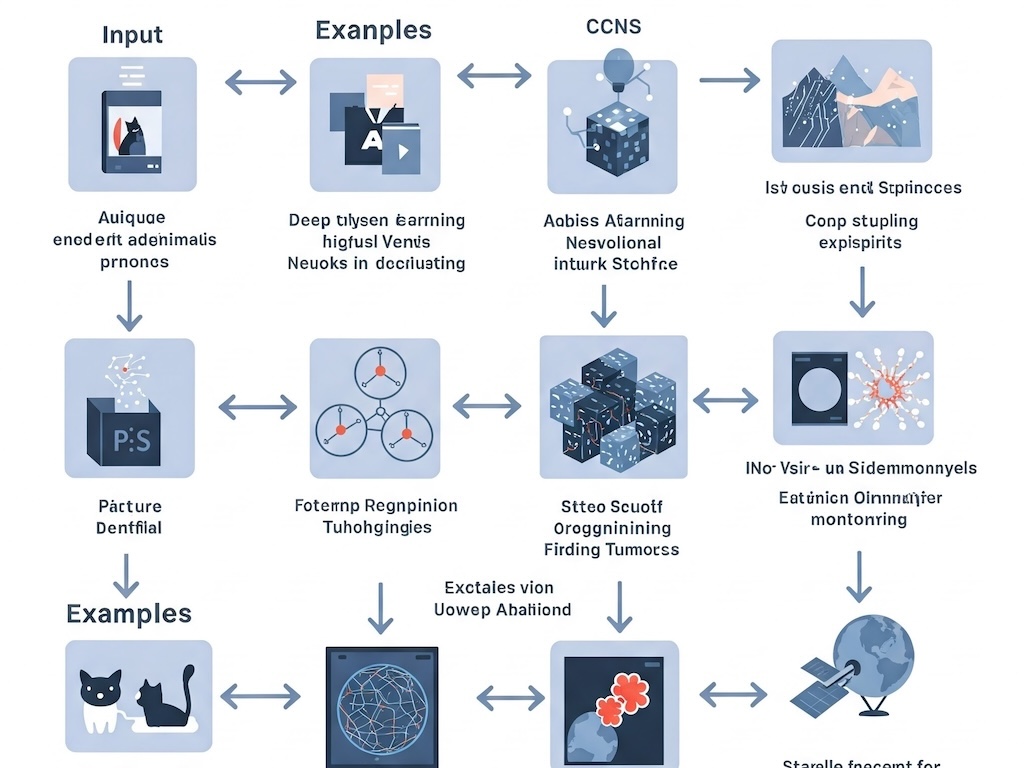
How AI Can Understand Images: From Spotting Cats to Finding Tumors
AI is getting remarkably good at recognizing what's in an image — whether it's a pet cat, a traffic sign, or a possible tumor on a medical scan. But how does a computer "see" anything at all?
It doesn't, really. Not the way humans do. What AI does is learn to recognize patterns in pixels — and it gets better the more examples it sees.
Learning from Thousands of Examples
AI doesn't automatically know what a dog looks like. It has to learn by seeing many examples, just like a child does. Researchers feed the AI thousands or millions of labeled images — "this is a cat," "this is a car," "this is a fracture." Over time, the AI detects patterns: fur texture, ear shape, the spacing of eyes, the outline of a bone crack.
When it's shown a new, unlabeled image, it uses those learned patterns to make an informed guess about what it's looking at.
From Pixels to Meaning
At the lowest level, an AI system sees only raw pixels — tiny squares of color. It uses a type of model called a neural network to make sense of them. The network processes information in layers. Early layers detect edges and curves. Middle layers recognize basic shapes. Deeper layers combine these into complex features — like the nose of a dog or the outline of a lung.
Each layer builds on the one before it, gradually turning a grid of colored dots into something the system can identify.
Where This Matters Most: Medical Imaging
One of the most important applications is healthcare. AI systems trained on thousands of chest scans can learn to spot signs of pneumonia, tumors, or fractures — sometimes catching things that are easy for a human eye to miss in a busy shift.
The AI doesn't replace the doctor. It highlights areas of concern, acting as a second opinion that's available instantly. Research shows that when AI tools work alongside medical professionals, diagnostic accuracy improves compared to either working alone.
Everyday Uses
Beyond healthcare, image recognition powers the things we use daily without thinking about it. Your phone unlocks by recognizing your face. Google Photos groups your pictures by who's in them. Self-driving cars identify pedestrians, lane markings, and stop signs. Security cameras flag unusual activity.
All of it works the same way: patterns learned from massive amounts of labeled image data, applied to new images in real time.